
A structural steel estimator decides which invitations to bid are worth pursuing, reads the drawing set, performs the takeoff of every column, beam, and connection, prices material, shop labor, coatings, freight, and erection, and submits and defends the bid. After award, that estimate becomes the budget the shop is held to.
Key facts
- The job runs from the invitation to bid to the handoff after award. Most of the hours go into the takeoff and into carrying revisions.
- A steel estimator prices fabrication and erection of structural steel, not the building. General contractor estimators work across all trades. Steel estimators work one trade to the connection level.
- The estimators we talk to put the time to real proficiency on a shop's own work in the hundreds of hours, usually the better part of a year before someone carries bids alone.
- Good steel estimators are hard to hire. Openings stay open for months, and a candidate with steel experience still needs time on your shop's work before their number is one you bid on.
- Win rates at the shops we talk to cluster around 10 to 15 percent, so most of an estimator's work is on jobs the shop does not get.
What the week looks like
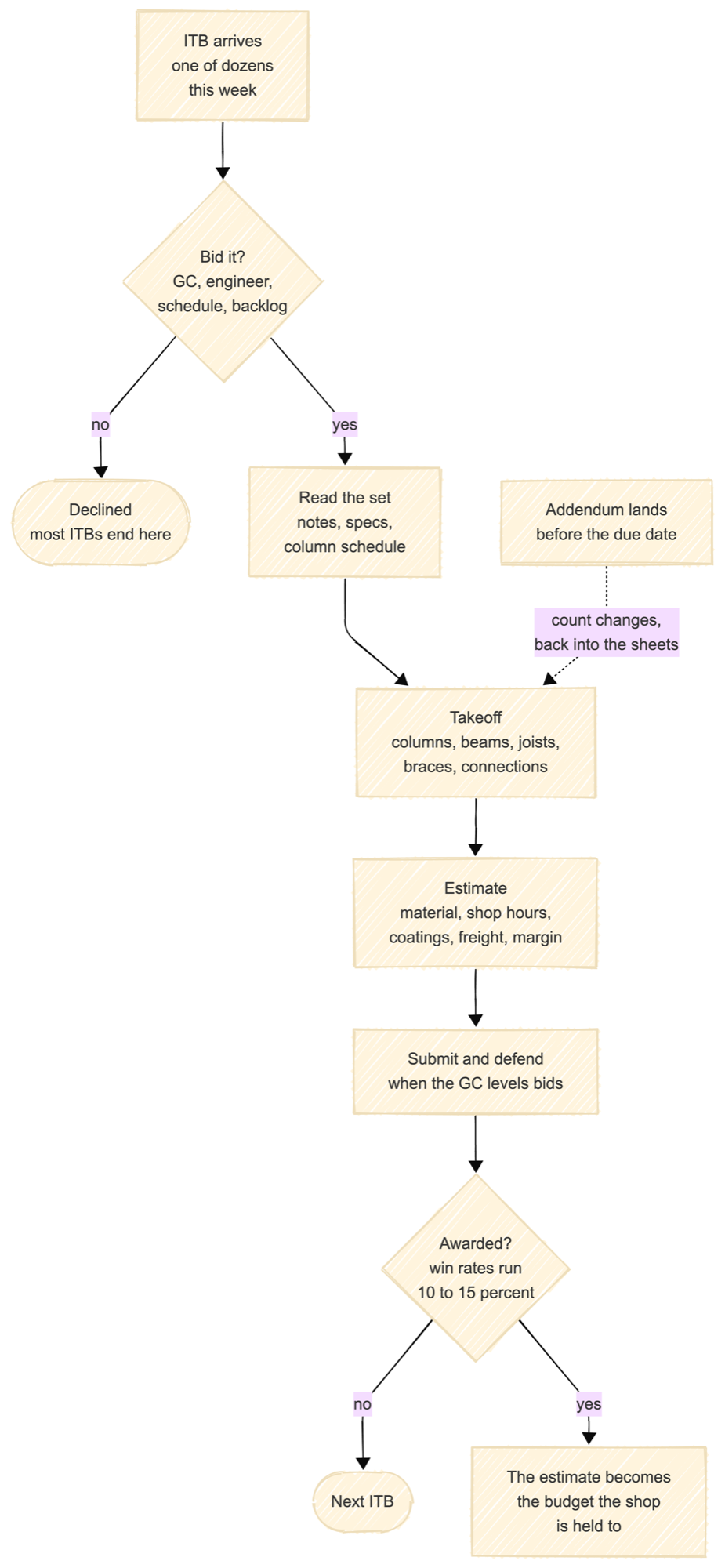
An ITB lands, often one of dozens that week. The first decision is whether to bid it at all: the GC, the engineer, the location, the schedule, and the shop's current backlog all feed that call. On a yes, the estimator reads the set. General notes, specs, the column schedule, typical details, then sheet by sheet.
Then the takeoff. Columns first, beams off the framing plans, joists and braces, connections noted per beam end, math to tonnage. On a mid-size commercial job that is days of work by hand.
Then the estimate. Material at current mill and service center pricing, shop hours by operation and connection type, coatings, freight, erection if the shop self-performs, and margin. The number goes out with qualifications and exclusions, and the estimator defends it on the phone when the GC levels bids.
Addenda arrive before the due date and change the count. After award, the estimate becomes the budget the project manager and the shop are held to for the next year or more.
Estimator, detailer, project manager
Three roles get confused from outside the trade. The estimator produces the bid number before award. The detailer produces shop and erection drawings after award. The project manager runs the job against the estimate. In a small shop one person may wear two of those hats, which is part of why the role is hard to hire for.
How long does it take to become a steel estimator?
The estimators we talk to put real proficiency in the hundreds of hours, usually the better part of a year before someone carries bids alone. Knowing steel is the smaller half. Learning the shop's rates, its fabrication strengths, and its risk appetite is what takes the time, and it is also what makes the numbers worth trusting.
What makes a good steel estimator?
Reading drawings fast is the entry requirement. The real skill is knowing the shop: which connections the fit-up crew is fast at, what the paint line can handle, how the erector wants sequence, and which GCs pay on time. That is why a new estimator with steel experience still needs most of a year on your work before their number is one you bid on without checking.
How Ferra handles this
Ferra takes the counting off the estimator's desk. It reads the set, detects columns, beams, joists, and braces, and returns a takeoff for review, which leaves the estimator's hours for the judgment calls above. Rapid Estimate puts a conceptual price on a job before the takeoff starts, which is the bid-or-not call at the top of the week. For the hire, outsource, or software question, read outsource, hire, or buy software: how steel fabricators fix an estimating bottleneck.
Sources
- AGC and NCCER, 2025 workforce survey, in which 92 percent of contractors report difficulty filling open positions.
- AISC 303, Code of Standard Practice for Steel Buildings and Bridges, on the fabricator's scope of work.