
AESS is architecturally exposed structural steel: steel left visible in the finished building and fabricated to the appearance requirements of AISC 303 Section 10, categories AESS 1 through 4 plus custom category C. The steel is the same; the labor is not, and unpriced AESS scope is one of the fastest ways to lose money on a bid.
Key facts
- AESS is architecturally exposed structural steel: steel that stays visible in the finished building and is fabricated to appearance standards, not just structural ones.
- AISC 303 Section 10 defines the categories: AESS 1 through 4, rising in strictness, plus AESS C for custom requirements the architect writes out.
- Higher categories mean ground welds, filled surface imperfections, tighter tolerances, continuous appearance of joints, and handling that avoids mill marks and scratches.
- The steel is the same. The labor is not. AESS multiplies shop hours on the affected members, and it costs erection time too, because the erector cannot leave the usual scars.
- The estimator's job is scope: exactly which members are AESS, to which category, per the contract documents. Vague AESS notes are a pricing hazard.
What are the AESS categories?
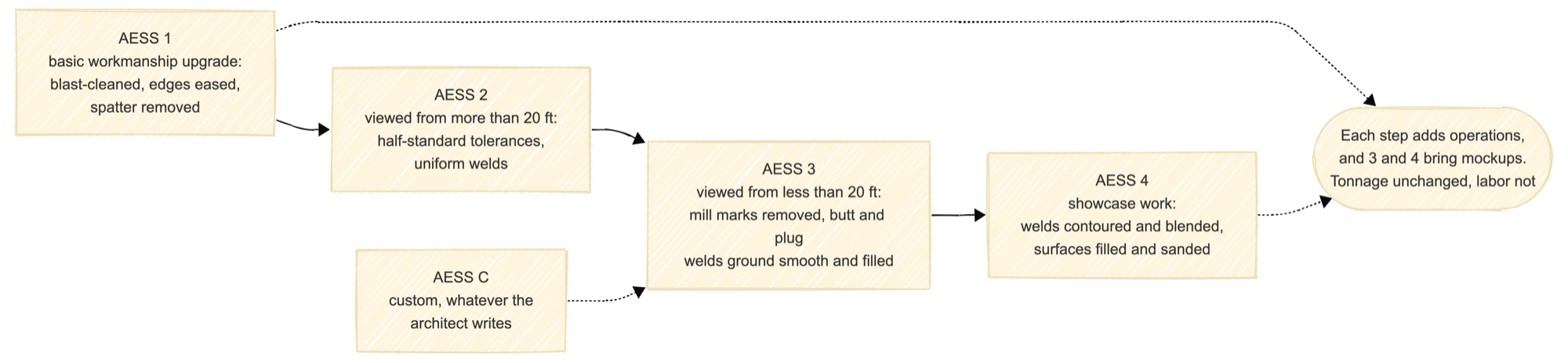
AESS 1 is the basic workmanship upgrade: blast-cleaned surfaces, sharp edges eased, weld spatter removed. AESS 2 is for steel viewed from more than 20 feet: tolerances tightened to half of standard, uniform welds, fabrication marks not apparent. AESS 3 is for steel viewed from less than 20 feet: mill marks removed, butt and plug welds ground smooth and filled, HSS seams oriented away from view. AESS 4 is showcase work, where the member is effectively an architectural finish: welds contoured and blended, surfaces filled and sanded, seams made invisible. AESS C is whatever the architect specifies, which can be lighter or heavier than the numbered categories, and has to be read line by line. The 20-foot line between 2 and 3, and the filled-and-sanded step at 4, are where the money changes.
Each step up buys operations the shop does not normally perform: grinding, filling, blending, masking, protective wrapping, and rehandling with softeners so chains never touch the finish. Surface preparation starts at SSPC-SP 6 blast cleaning from category 1, and categories 3 and 4 bring visual samples or mockups into the conversation, which is shop time before the first production piece. Paint-grade expectations on structural members is the mental model.
Why AESS wrecks unpriced bids
Because the tonnage does not change. A bid priced on weight alone carries identical numbers for a hidden roof beam and an atrium column at AESS 3, and the informational cost guidance published alongside the category system has the premium on affected tonnage climbing steeply by category, to a doubling or more at AESS 4. The hours move; the weight never does. The scope note that triggers it can be one line in the architectural specs, not the structurals, which is why spec reading is part of a steel takeoff. AESS is one of the fastest movers of shop hours per ton on the list.
How Ferra handles this
Ferra's Bid Intelligence reads the full document set, including the architectural specs where AESS scope hides, and flags appearance requirements before estimator hours are committed, so AESS members get identified and priced as what they are. See Bid Intelligence.
Sources
- AISC 303, Code of Standard Practice for Steel Buildings and Bridges, Section 10, the AESS category definitions and requirements.