The Honest Guide to Structural Steel Estimating

Most guides to structural steel estimating teach you the steps. The steps were never the problem. Bidding the wrong jobs, slow takeoffs, and revision churn are where fabricators actually lose time and margin, and where the right software earns its keep.
Search "how to estimate structural steel" and you'll get a dozen guides that walk you through the same steps. Read the drawings. Do your takeoff. Price the material, add labor, submit the bid. All technically correct. None of it explains why good shops with experienced estimators still lose money on bids.
Here's the part nobody writes about. In structural steel, estimating isn't where you win work. It's where time and margin quietly disappear. The steps were never the hard part. The volume, the revisions, and the wrong jobs are.
We build estimating software for steel fabricators. Over the last several months we've sat in on dozens of demos and onboarding calls with shops of every size, from two-person fab shops to some of the biggest fabricators in North America. This is what we actually heard, not the textbook version.
What structural steel estimating actually is
At its core, structural steel estimating turns a set of drawings into a number you can bid. Three moving parts:
The takeoff. Counting and measuring everything you have to fabricate and erect: columns, beams, connections, and miscellaneous steel. This is where your tonnage and piece counts come from, calculated off the standard section weights published by bodies like AISC in the US and CISC in Canada. If reading a W12x26 or an HSS callout is still slow going, our guide to structural steel shapes explains every designation and where the weights come from.
Pricing. Material plus labor plus everything that rides along: connections, coatings, freight, erection. Connections are the line people underestimate. Two jobs with identical tonnage can differ vastly in shop hours based on the steel connection types alone.
The bid. A go or no-go call, and a number you're willing to stand behind.
Most of the industry still runs the takeoff in a tool like Bluebeam, exports to Excel or Tekla, and stitches the rest together by hand. Those are different categories of steel fabrication software, which is why the stitching is manual. That works. It's also exactly where the trouble starts.
Where steel estimates actually break
If you've estimated steel for any length of time, none of this will surprise you. It's worth naming anyway, because almost every guide skips it.
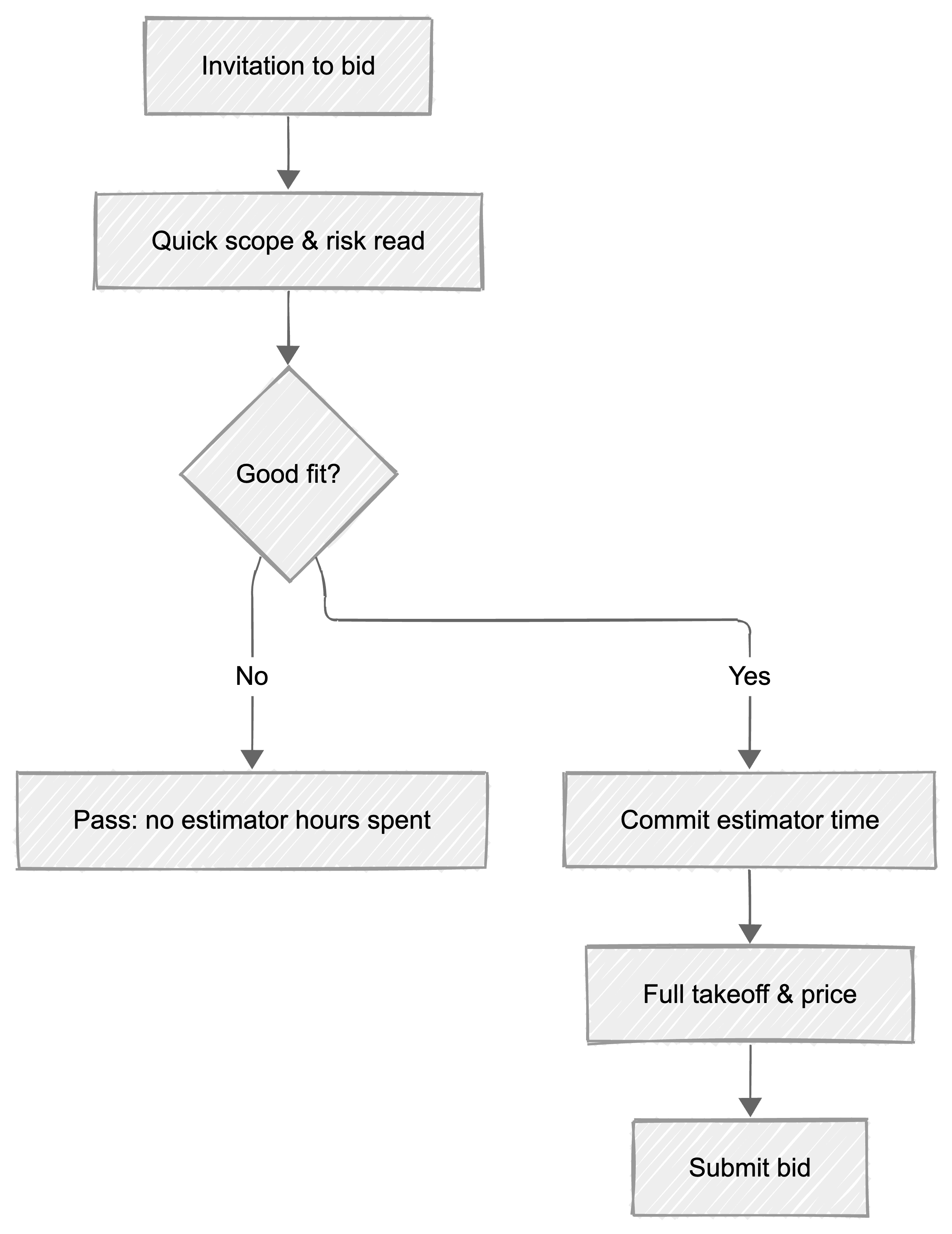
You're bidding the wrong jobs. Estimators tell us they get dozens of invitations to bid every week. Try to bid them all and you land where most shops do, a 10 to 15% win rate, with a team working past midnight. The most expensive estimate is the one you spend a week on and lose. The second most expensive is the one you win and then can't fabricate on schedule. Good structural steel estimating starts before the takeoff, with an honest go or no-go.
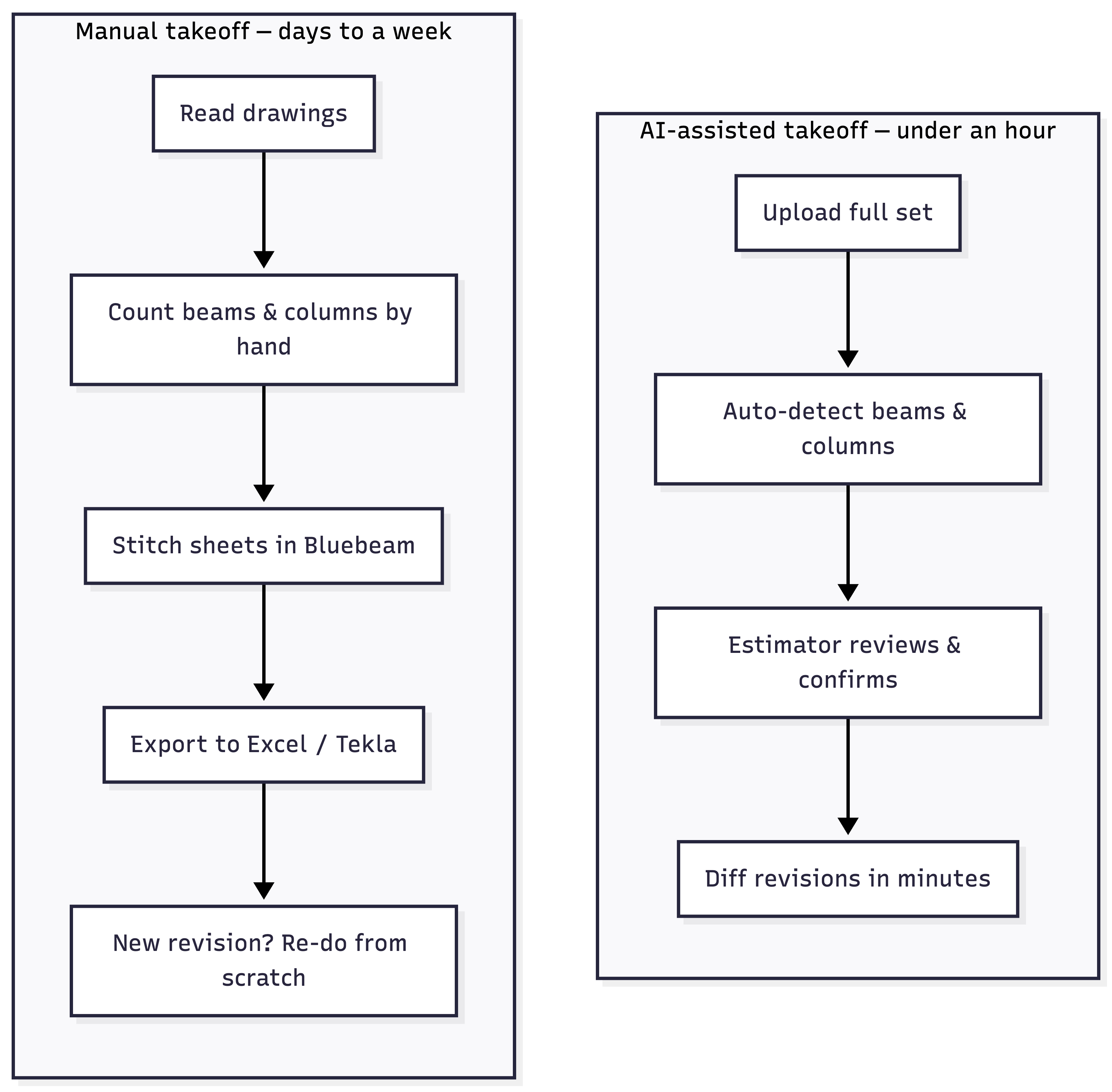
The takeoff is a time sink. Columns and beams on a single job routinely take days. One chief estimator described spending the better part of a week just to pull columns and beams off a single floor. Now multiply that across every ITB on the board. That's the real cost of a manual steel takeoff. Not the difficulty, the hours.
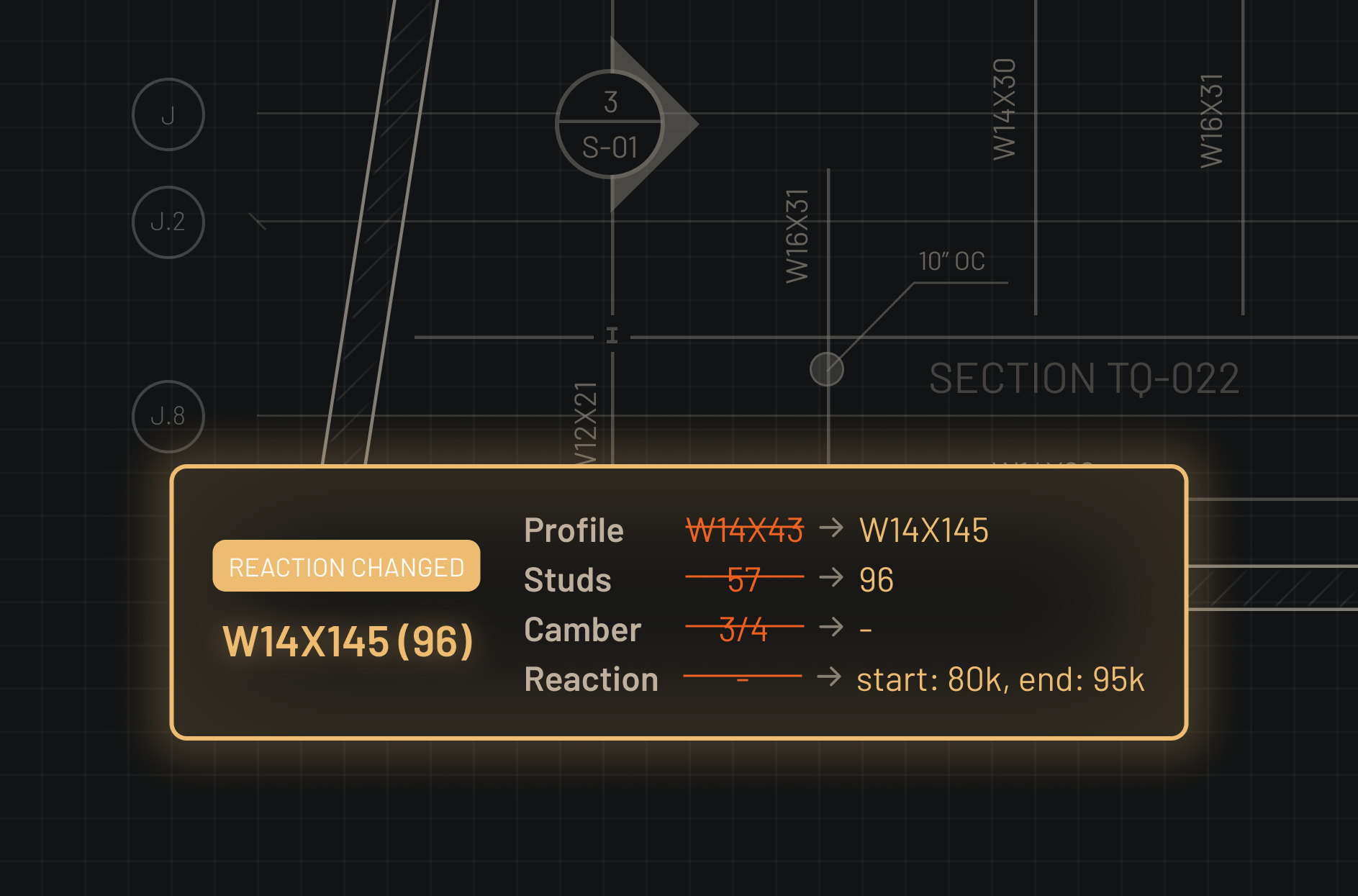
Revisions quietly drain your margin. Steel jobs don't sit still. You bid off a 30% or 60% set, then a fresh design set lands and you're re-estimating from scratch. Addenda pile up. If the same beam gets counted twice across three revisions, your tonnage is wrong and so is your number. One estimator summed it up: "with each addendum, I lost a day." Structural steel cost estimation lives or dies on catching what actually changed between sets.
Columns are the hard part. Beams are relatively easy to take off. Columns, especially with no column schedule, are where it falls apart for people and software alike. Any structural steel estimator will tell you the same.
The honest truth about AI steel estimating software
This is the section the polished guides won't write, because most of them are selling you something. In 2026, AI is only now reaching structural steel, a trade that's been slow to modernize, and even industry publications like Modern Steel Construction are catching up to the shift.
Every tool in this space says it does columns. One estimator described the trial experience perfectly. They all say "we do columns, we do columns, we do columns," and then you run it and it turns out to be "yeah, we do columns… kind of."
So if you're evaluating structural steel estimating software or steel takeoff software, here's how to cut through the demo.
Test columns, not beams. Anyone can detect beams. Columns without a column schedule are the real test, so make that the first thing you check.
Run your own job, live and unseen. Demo projects are rehearsed. Hand them a set they haven't seen and watch it run. If it looks too good to be true on their project but you never tested yours, you don't actually know anything yet.
Push hard on revisions. Can it compare two sets and tell you what changed without double-counting? That's where most tools quietly break.
Watch for tools built for general contractors. A lot of AI construction estimating software is built for GCs and other trades, then pointed at steel. Structural steel is niche, and steel fabrication estimating software should be built for it.
Apply the honesty test. Anyone promising a perfect 10-minute takeoff is overselling. The real standard is high accuracy with an estimator in the loop. Trust, but verify.
What a better workflow looks like
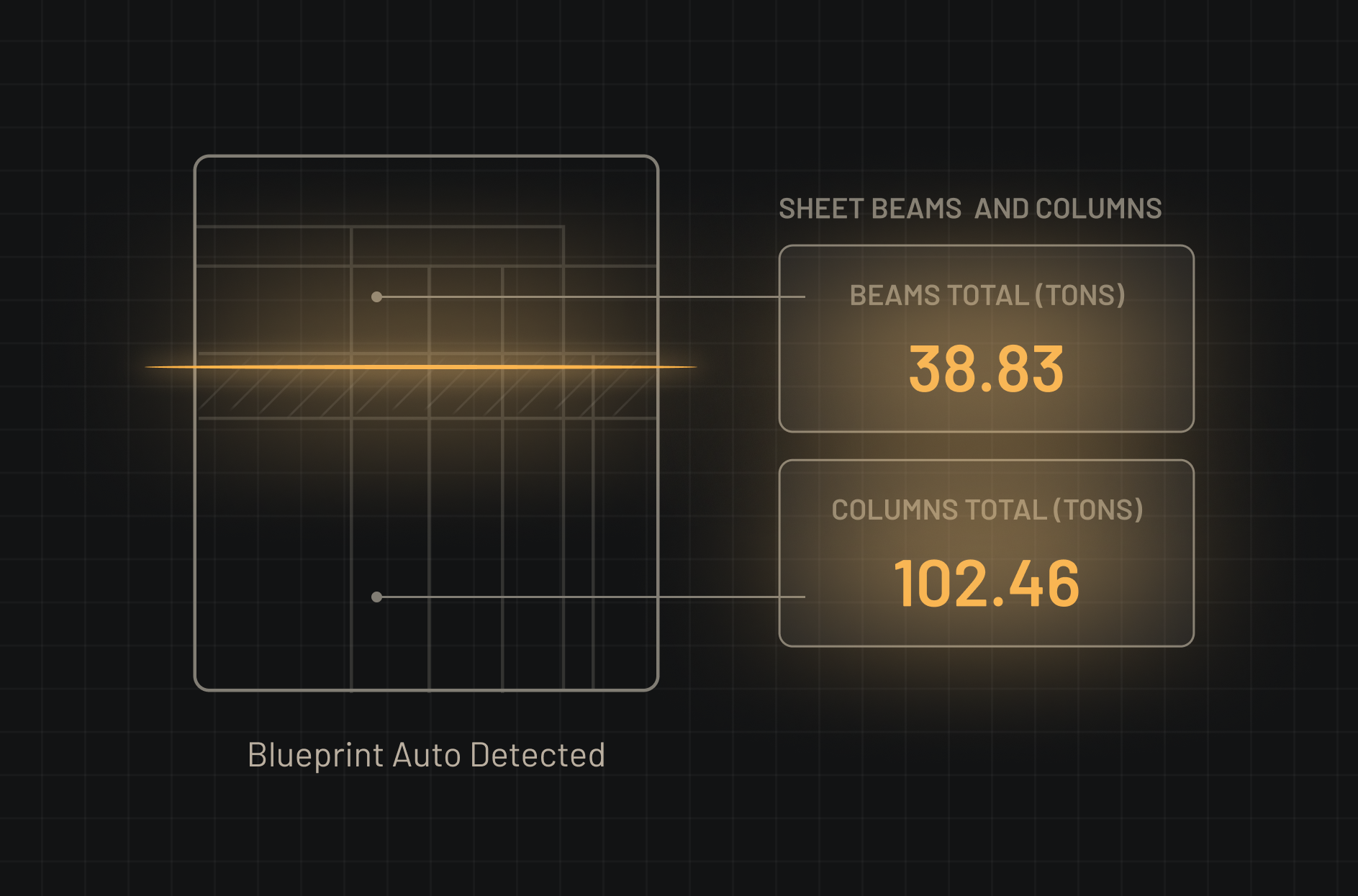
This isn't about replacing the estimator. The judgment that decides a bid is exactly the part you want a human on. It's the counting, the sheet-flipping, and the revision-diffing that should be handed off.
A modern steel takeoff should detect beams and columns across the full set automatically, link the views so you stop flipping between sheets, and compare two revisions in minutes instead of days. The estimator still owns the number. They just stop counting bolts at midnight. That's the line Ferra draws: automate the counting and the diffing, and leave the judgment to the estimator.
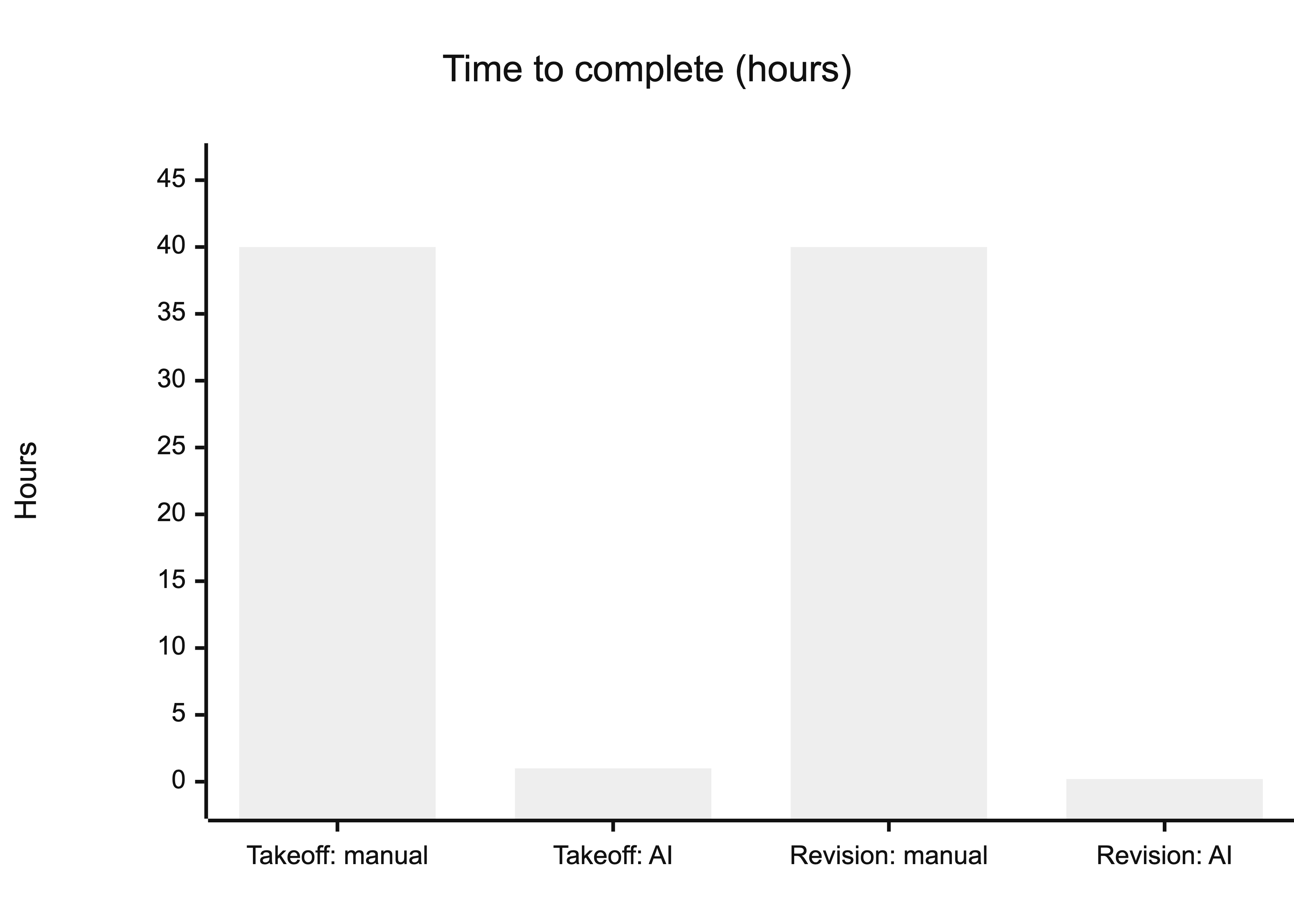
The numbers we hear from the fabricators we work with are hard to ignore. Takeoffs that used to take days finished in under an hour. A change order that took a chief estimator a week handled in minutes. One shop ran a 6,000-page set and got a usable report back in about the time it takes to grab a coffee. Speed like that doesn't only save hours. It changes which jobs you can afford to bid at all.
So what should you do with this
More bids was never the goal. The shops that win consistently bid fewer jobs, but the right ones, and fast enough to walk away from the rest without flinching. They aren't the ones with the most estimators. They're the ones who stopped losing a week per job to manual takeoffs and revision churn. If you are weighing whether to outsource, hire, or add software, that distinction is the whole decision.
If that's the team you're trying to build, that's the problem we built Ferra to solve.
See it run on one of your own projects. Book a demo.
FAQs
How long does a structural steel takeoff take?
By hand, columns and beams on a single job often take days, and a full set can take a week or more. The estimators we work with describe AI-assisted takeoffs finishing in well under an hour once the estimator reviews and confirms the output. The time goes into judgment, not counting.
What is the hardest part of structural steel estimating?
Columns, especially when the drawings have no column schedule. Beam takeoff is comparatively straightforward. This is also the fastest way to test estimating software: see how it handles columns before you believe anything else it claims.
What is the difference between a steel takeoff and an estimate?
The takeoff is the count: every column, beam, connection, and miscellaneous item, with tonnage and piece counts. The estimate is what you do with it: pricing material and labor and turning it into a bid. A clean takeoff is the foundation of accurate structural steel cost estimation.
How accurate is AI structural steel takeoff software?
The good tools get most of the way there on columns and beams and flag what needs a human's eyes, so a structural steel estimator reviews rather than counts. Be skeptical of anyone claiming a perfect takeoff with no review. Accuracy with a human in the loop is the honest standard.
How do you choose structural steel estimating software?
Test it on columns, run one of your own projects live, and confirm it handles revisions without double-counting. Favor steel fabrication estimating software over general-contractor tools pointed at steel, and weigh how responsive the team behind it is, because the roadmap matters as much as today's feature set. Ferra is built to that standard: a structural-steel-only tool that detects beams and columns across the full set, compares revisions without double-counting, and keeps the estimator reviewing every number. For how the specific options stack up against each other, see our comparison of structural steel estimating software.
Why do steel fabricators lose money on bids?
Usually not the math. It's bidding too many of the wrong jobs, burning estimator hours on dead ends, and missing scope changes buried in revisions. Fixing the front of the funnel, what you choose to bid, and the back, what changed since you bid it, protects more margin than any pricing tweak.